
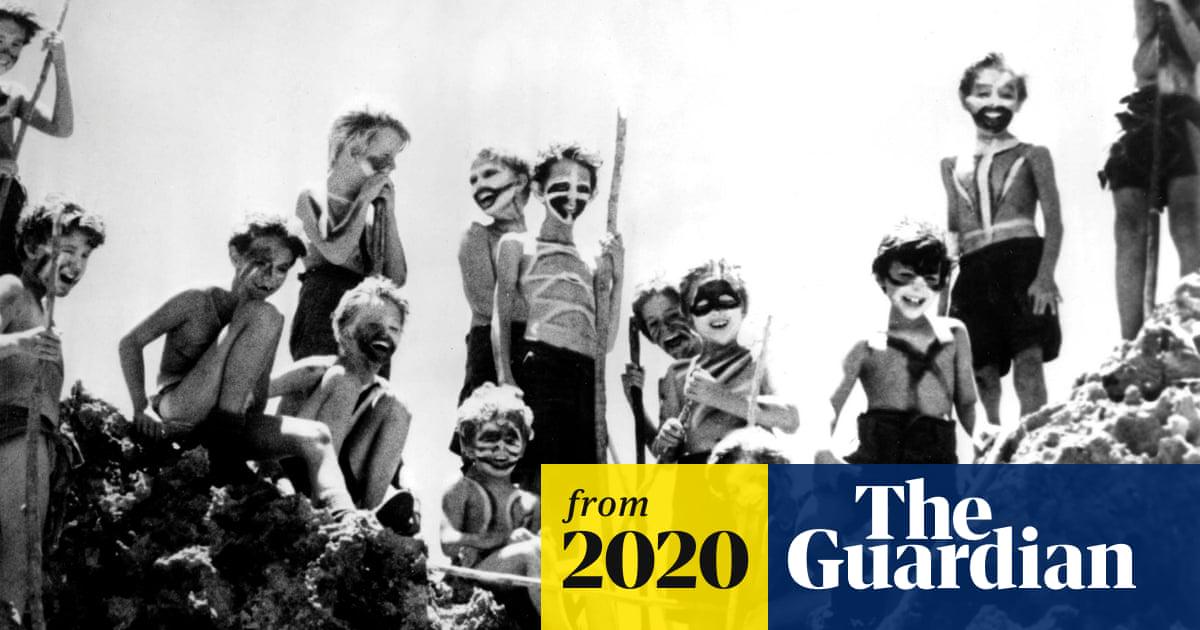
We often hear the term Orwellian used to describe our modern world. Others argue Brave New World is a more accurate map of our distractible society, and we even see suggestions that we are now living in an Idiocracy. Does Lord of the Flies have any modern applicability?
Whenever it comes up on Reddit, the top comments usually dismiss it as a product of its time; a cynical response to Victorian castaway tropes like The Coral Island. Others argue the behavior is just a result of British private school trauma. The most common gotcha is the real-life story of the six Tongan teenagers, where cooperation trumped all.
I agree that if you dropped 40 boys (aged 6-12, mostly 'littluns') on an island, it wouldn't necessarily end in chaos. But Golding wasn't writing a survival manual; he was writing a political autopsy.
To me, the story is a timeless study of how democracy fails.
A fragile system of rules and procedure (he who holds the conch can speak) that is brushed aside the moment people get scared. An imagined threat (the Beast) used to justify the dismantling of order.
The prophet (Simon) who realizes the Beast is just a dead airman and is killed for trying to bring the truth. The literally shortsighted boy (Piggy) who ironically has the most foresight. He sees exactly where the savagery will lead, but because he lacks the right social standing and voice, his rationality is treated as an annoyance.
The leader (Jack) who gains power by promising protection against the Beast. And finally the average people (Samneric) who aren't inherently cruel, but are eventually co-opted into the machinery of fear just to stay safe.
It's one of my favorite Nobel Prize in Literature winners, and I'm glad I studied it in school. It helped me, as a teenager, understand why people turn to leaders who promise protection against the other (real or imagined), and how those who bring rationality to a crisis are so easily unheard.
I worry when the response to this book is "it couldn't happen here" or "they aren't like us." That response fails to recognize the common humanity, both the capacity for good and the vulnerability to fear, that Golding was trying to warn us about.
by goshafoc
6 Comments
What you are engaging in is “erecting a strawman”.
hush, bot
Yeah the Tongan boys comparison always felt weird to me – like comparing apples to oranges. Those kids were older and had actual survival skills, plus they weren’t dealing with an invisible “monster” that nobody could prove existed.
The political allegory is what makes it stick around. You can see the same patterns playing out whenever people get scared enough – doesn’t matter if it’s kids in school or adults in society. The fear becomes more real than actual facts, and suddenly the rational voices sound like they’re being annoying instead of helpful.
Agreed. Lord of The Flies is strangely seen as the sum total of its parts and doesn’t enjoy even half of the general interest that 1984 or Animal Farm or Brave New World do.
I personally found it the most powerful among all these books, and I can’t bear to reread it.
This post reads like you assume other people DON’T read it as an ‘autopsy on democracy’.
To the extent of the book is allegorical, I don’t find allegory to be an interesting way to discuss current past events.
To the extent that it is a ported exploration into human nature, I find it unconvincing and holy creation of the author